How to Buy from Yiwu Market: A Step-by-Step Guide for First-Time Wholesale Buyers
Learning how to buy from Yiwu Market is mostly a matter of preparation and sequence. Yiwu International Trade City — often called Futian Market — is a sourcing environment built for volume, and overseas importers, wholesalers, chain stores and distributors who arrive without a plan tend to leave with a bag of samples and no reliable supplier. This guide walks through the process in the order it actually happens, from the list you prepare at home to the container you dispatch from a Yiwu warehouse. It is written for a first-time wholesale buyer placing a bulk order, not for someone testing a single item.
Step 1: Prepare Before You Start
Most of the value in a Yiwu buying trip or sourcing project is created before any supplier is contacted. Four documents should exist first.
- A product list with specifications. For each item: material, dimensions, weight, colour, packaging format, and the intended retail or wholesale price in your market. "Plastic storage box, medium" is not a specification; "PP storage box, 30×20×15 cm, 1.2 mm wall, lid with clip closure, export carton of 40" is.
- Target prices. Work backwards from your landed cost expectation, not from what a supplier quotes. Include freight, duty and inland distribution so you know which quotes are viable.
- Quantities per SKU. Yiwu suppliers quote very differently at 200 pieces than at 2,000. Typical minimum order quantities run 100–800 pcs per style depending on category, and mixed multi-SKU orders are supported, so decide early how many styles you want to spread the volume across.
- Destination market compliance. Toys for the EU need EN71; the US market expects ASTM F963/CPSIA; electrical items need the relevant CE documentation; food-contact goods need FDA or equivalent testing. Compliance is coordinated with ISO 17025 third-party laboratories per product and destination — the agent does not issue certificates itself — so build testing time into your schedule rather than discovering the requirement at the port.
Step 2: Choose Categories and Market Districts
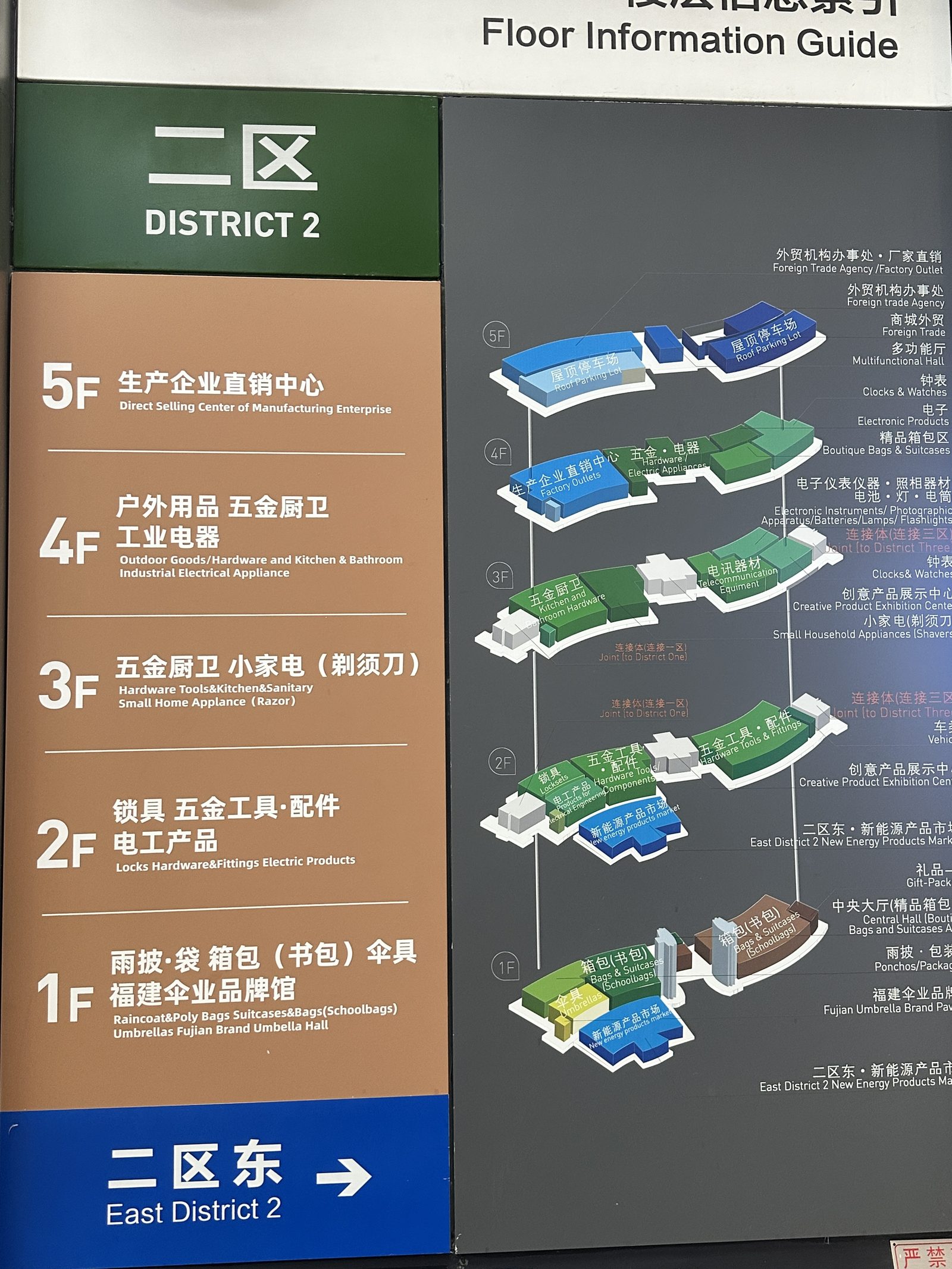
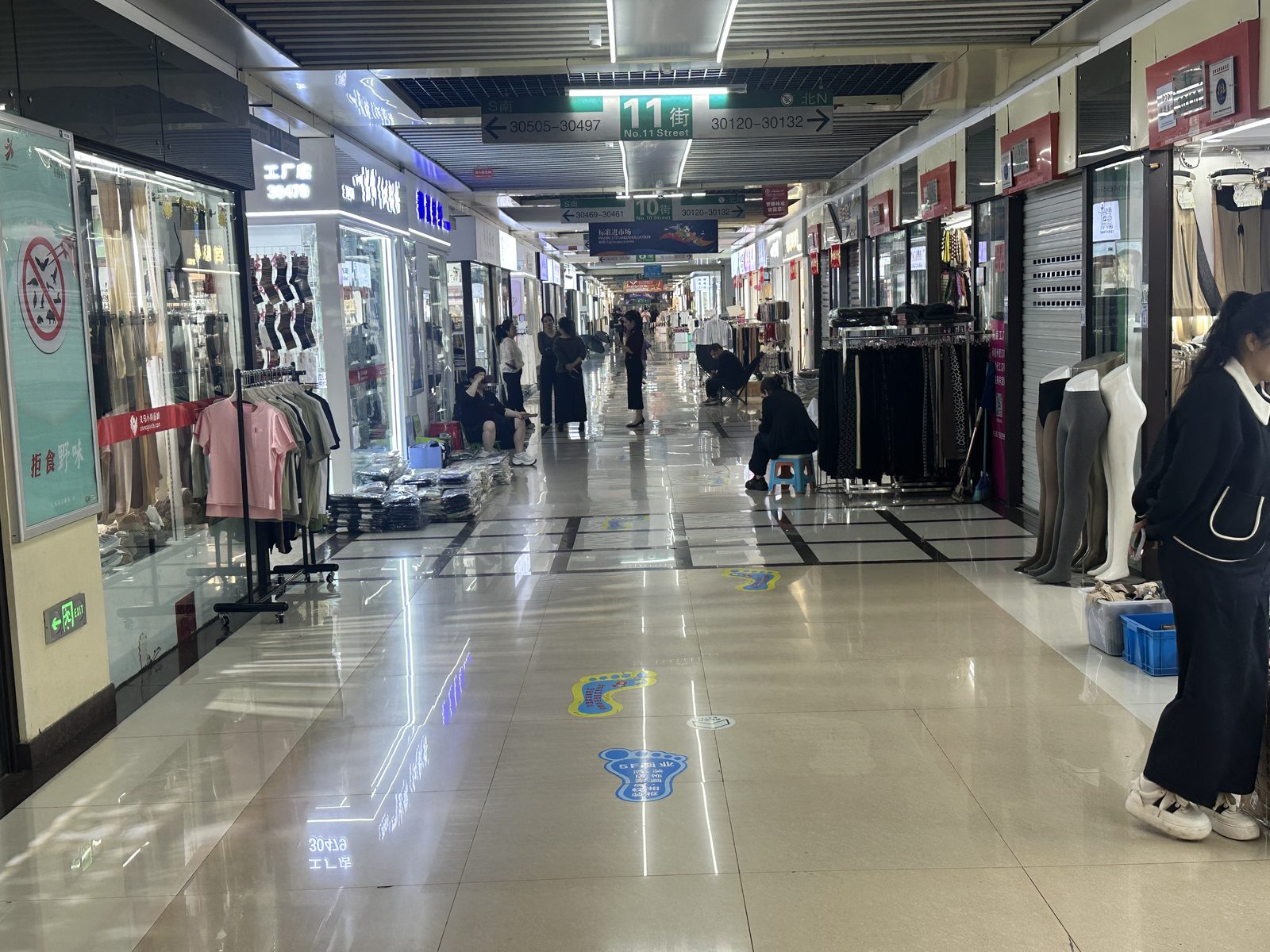
Futian Market is organised by district and category, and walking it without a category map wastes days. The districts most relevant to general wholesale buyers:
- District 3: daily cosmetics and bags. Useful if you are building a beauty accessories or bag range.
- District 4: home and daily goods — the widest general-merchandise floor for household, kitchen and everyday items.
- District 5: bedding, curtains, auto accessories and imported goods.
Nearby industrial belts matter as much as the market itself: Jinhua, Yongkang, Pujiang and Dongyang host production for hardware, textiles and related categories. A supplier with a booth in Yiwu is not necessarily a factory, and confirming which is which belongs in the screening step, not after the deposit. If your range spans categories — household goods, hardware tools, bags, fashion accessories, textiles, toys, small appliances — plan the market days by district and keep a single consolidated specification sheet so quotes stay comparable across booths.
Step 3: Get Samples and Compare 3–5 Options Properly
The standard approach is to request 3–5 alternative supplier options per item and compare them on three dimensions, not price alone:
- Cost: unit price at your actual quantity, plus packaging, labelling and carton costs. A lower unit price with expensive custom packaging is not lower.
- Lead time: stock versus custom production differs substantially by category. Custom ranges commonly take 15–50 days depending on product type, before inspection and dispatch.
- Quality risk: material consistency, finish, tolerances, and how the supplier responds to a specific question about a defect. A supplier who answers precisely is usually the safer one.
First samples typically take 7–15 days including customisation such as logo printing, colour matching, packaging and multilingual labels or instructions. Pay for samples rather than accepting vague assurances, and keep written records of what each sample represents — the approved sample becomes the reference for the inspection later.
Step 4: Confirm the Order
Once one supplier per item is selected, the order moves to paperwork. Four items must be explicit before production starts:
- Proforma invoice (PI) listing every SKU, quantity, unit price, packaging specification and the agreed Incoterm.
- Incoterms: EXW, FOB Ningbo/Shanghai, CIF or DDP. FOB is common for buyers who control their own freight; DDP suits buyers who want a landed price. Choose deliberately — the term determines who arranges and pays for each leg.
- AQL level: AQL 2.5/4.0 sampling is the standard arrangement, with a stricter 0.65 level available on request for higher-risk or higher-value items.
- Payment terms: T/T 30% deposit with 70% balance against copy of bill of lading or before shipment is standard. L/C is workable for larger or first orders; PayPal/Alipay suits small test orders and samples under US$2,000; a staged 30/30/40 structure is available where production milestones justify it.
Order size shapes the commercial structure: under US$5,000, US$5,000–50,000, and above US$50,000 are handled differently, and quarterly or annual framework agreements can lock exchange rates and batch pricing for repeat ranges.
Step 5: Production and Inspection
The standard production and purchasing window is 15–45 days after order confirmation, depending on category and whether goods are stock or custom. Inspection should not be a single event at the end. A workable structure covers the order across its life:
- Pre-production sample (PPS) approval against the specification sheet.
- Mid-production checks to catch material or assembly problems while correction is still cheap.
- Final inspection using IQC/IPQC/PQC/FQC/OQC checks and AQL sampling, with the inspection report — photos, video, defect list and re-inspection records — sent at least 3 days before shipment so you can react before the container is loaded.
Third-party inspection by SGS, BV, TUV or Intertek can be coordinated on request. Batch samples and records are kept at least 12 months, which matters if a defect claim arises months after delivery. Quality issues are reported within 24 hours and followed through a 24–48–7 day closure loop: acknowledgement, corrective action, and verified closure.
Step 6: Consolidation and Shipping
If you bought from several suppliers across categories, consolidation is where the order becomes shippable. At a Yiwu warehouse, goods can be combined into multi-SKU mixed cartons, gift bundles, seasonal packs, relabelled cartons, export cartons and wooden pallets. Consolidation and dispatch typically take 5–15 days.
Freight options and baseline transit times:
- Sea freight: South America 45–55 days; Europe 30–45 days; US West Coast 35–50 days. Full container or consolidated LCL.
- Air door-to-door: 7–15 days.
- China–Europe rail: 20–30 days.
- Express couriers: 3–7 days worldwide, suitable for samples and urgent replenishment rather than bulk.
Documentation to confirm before dispatch: commercial invoice, packing list, certificate of origin (CO/Form A where applicable), bill of lading, insurance and customs declaration. HS code advice should be settled early — a misclassified line item can stall clearance and erase the margin on the whole shipment.
Step 7: Common First-Order Mistakes
Three errors account for most first-order problems.
- Ordering seasonal goods too late. Holiday and seasonal ranges should be locked 90–120 days ahead. Production, inspection, consolidation and sea transit together consume most of that window; ordering in October for December delivery rarely works by sea.
- Skipping inspection. The saving on an inspection fee is small against the cost of receiving a container of goods that do not match the approved sample, especially when the defect only becomes visible at retail.
- Mixing too many untested SKUs. A first order spread across thirty styles from fifteen suppliers multiplies risk and makes consolidation harder to control. Start with fewer SKUs, prove the supply chain, then widen the range.
A realistic overall cycle for a standard order is 30–90 days from requirement confirmation to dispatch, before transit. Planning against that timeline, rather than against the fastest quote received, is what separates a workable first order from an expensive lesson in how to buy from Yiwu Market.
Related services & guides
Start with a compared quotation
Send us your product list, target prices and quantities — you get compared quotations, not a single take-it-or-leave-it price.
Talk to a Yiwu Sourcing Agent