1688 vs Yiwu Market: How Wholesale Buyers Should Choose
The 1688 vs yiwu market question comes up in almost every sourcing conversation with overseas wholesale buyers, and the honest answer is that neither channel wins outright. They solve different problems. 1688 is a domestic Chinese wholesale platform built for trade between Chinese businesses; Yiwu International Trade City (Futian Market) is a physical wholesale marketplace where buyers walk booth to booth, handle samples and negotiate face to face. For an importer, wholesaler, chain store or distributor, the right choice depends on what you are buying, how standardised it is, and how much of the work you can absorb yourself versus handing to a sourcing agent. This comparison sets out how each channel actually works, where the risks sit, and a practical framework for deciding.
How each channel works
On 1688, the transaction is online and largely self-service. You browse listings, compare quoted tiers, place an order, pay through the platform, and the seller ships domestically within China — usually to a Chinese address rather than directly overseas. Product pages are written for domestic buyers, prices are displayed in RMB, and the seller assumes you can arrange your own domestic freight, export paperwork and international movement. Many sellers do not handle export at all, so a foreign buyer typically needs a Chinese receiving point, a consolidation warehouse and an export agent before goods leave the country.
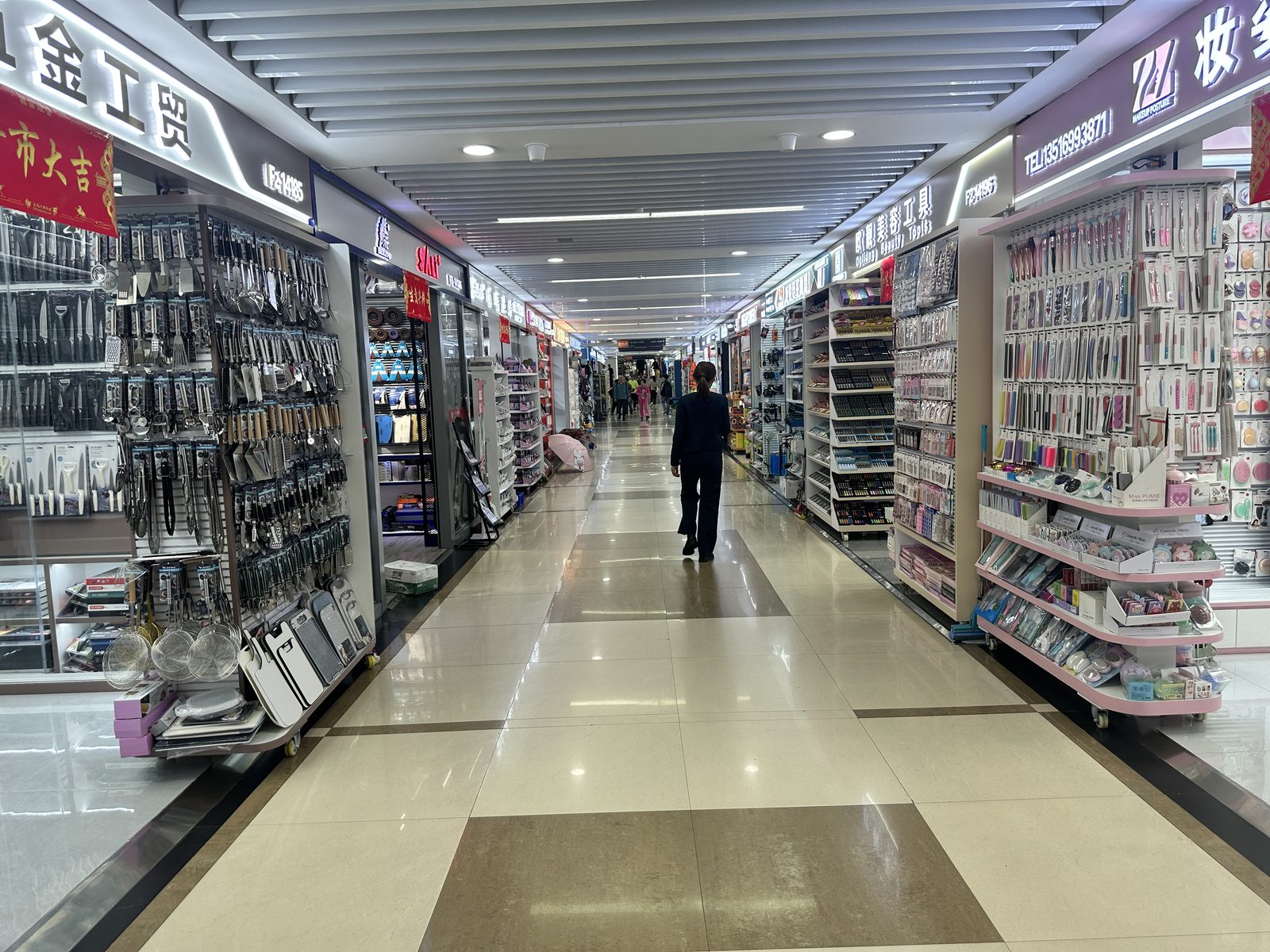
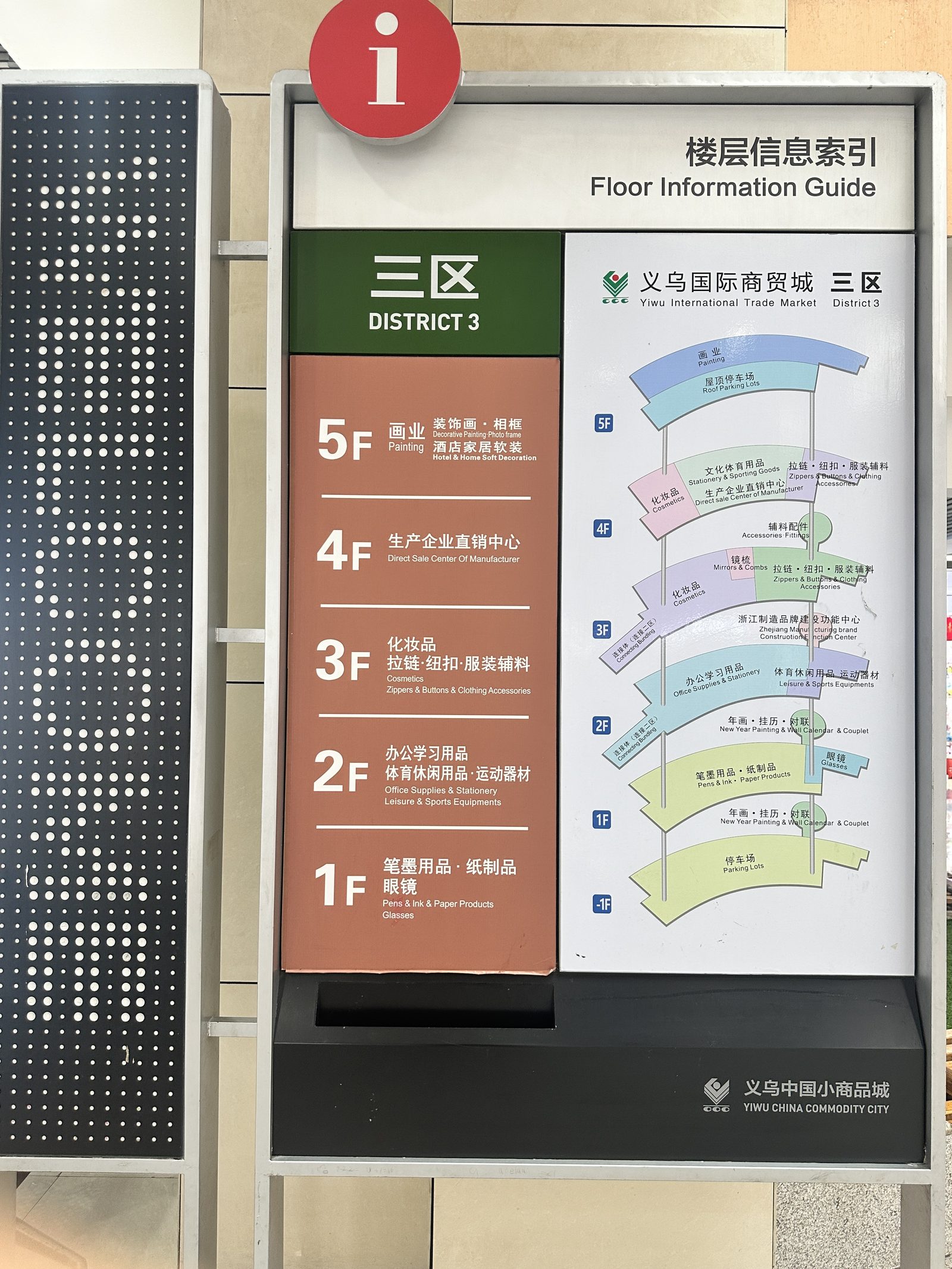
In the Yiwu market, the transaction is physical and relationship-driven. Booths are grouped by category across a very large wholesale complex, and suppliers around Yiwu, Jinhua, Yongkang, Pujiang and Dongyang feed into it. You visit, ask for a quotation on the quantity you need, examine samples on the spot, and negotiate. Because the market exists to serve wholesale buyers including a large share of export business, many booths are accustomed to mixed orders across categories and to buyers who consolidate several suppliers into one shipment. The trade-off is that you must be physically present, or work through someone who is.
Price and transparency
1688 list prices are published, which feels transparent, but the display price assumes domestic trade and varies with the seller's service level. A low headline price may reflect a bare product with minimal packaging, no export carton, no labelling support and no quality documentation. Once you add domestic freight to a warehouse, repacking, and any customisation, the effective cost rises. Comparing two 1688 sellers is also harder than it looks, because tier pricing, packing specifications and what counts as "included" are not standardised across listings.
Market prices are negotiated booth by booth with samples in hand. That means no published number to anchor on, but it also means you can see exactly what you are paying for: the weight of the material, the finish, the packing, the label. Experienced buyers treat the first quote as a starting point and compare three to five booths in the same category. The transparency is different in kind — less visible on paper, more verifiable in person.
MOQs and mixing
Both channels support small per-style quantities. On 1688, per-style minimums are often modest, but the practical constraint is that each order is a separate transaction with a separate seller, each shipping separately to your consolidation point. Buying twenty styles from twenty sellers means twenty sets of domestic freight, twenty packing standards and twenty points of failure to track.
The market is stronger for mixing many categories into one consolidated shipment. A buyer assembling a seasonal range — household goods, small appliances, fashion accessories, toys — can walk between sections in a single trip, place modest per-style orders with each booth, and have everything routed to one Yiwu warehouse for checking, relabelling and mixed-carton packing. For buyers whose value proposition is breadth rather than depth, that consolidation advantage is significant.
Quality risk and inspection
On 1688 you are assessing photographs, listing descriptions and seller messages. Photos can be selective, and a listing image may not reflect the batch you receive. The market lets you handle real samples before committing, which reduces specification risk — but it does not eliminate production risk. A sample approved in a booth and a bulk run three weeks later are not the same thing.
This is why goods from either channel still get checked at the consolidation warehouse before they are packed into export cartons. A sensible quality programme applies incoming checks when goods arrive, in-process checks where production is ongoing, and pre-shipment inspection against an agreed sampling level, with reports containing photos, video, defect lists and re-inspection records, and batch samples retained. Where a buyer's compliance requirements demand it, third-party inspection can be coordinated. The inspection step is what converts a hopeful purchase into a controlled one, regardless of whether the goods originated online or in a booth.
Customisation and communication
1688 communication happens in written Chinese through the platform, which suits simple, well-specified repeat items: you send a specification, the seller confirms, you order. It is less comfortable for changes mid-stream, packaging design discussions or anything requiring judgement about colour and finish.
Market communication is conversational and visual — you point at a sample, discuss logo printing, colour matching, packaging and multilingual labels for your destination market, and get a sense of whether the supplier understands the requirement. For customised ranges and first-time orders, that back-and-forth shortens the learning curve considerably. Neither channel removes the need for clear written specifications once terms are agreed.
Total landed cost thinking
Unit price is the least reliable number in this comparison. Build the landed cost instead: product cost, domestic freight to the consolidation point, repacking and relabelling, consolidation and export carton or pallet preparation, export documents, and international freight by the mode you choose. A 1688 order spread across many sellers can carry more domestic freight and more repacking labour than a market order collected from several booths in one city. A market order for a single standardised item may cost more per unit than a competitive online listing. Only the full stack tells you which is cheaper for your specific basket.
A decision framework
- Standardised repeat goods → 1688 can win. If you already know the specification, have an approved sample on file and are reordering the same item, the online channel is efficient. Prices are visible, the transaction is simple, and the specification does not need renegotiating each cycle.
- New ranges, mixed categories, seasonal assortments → the market usually wins. When you are still deciding what to buy, comparing materials by hand, or assembling many categories into one shipment, the physical market compresses the work. Holiday and seasonal ranges should be locked well ahead of the season, so start the market trip early enough to leave room for production and freight.
- Hybrid sourcing is the common pattern. Many buyers run both: standard lines replenished online, new and seasonal lines developed in Yiwu, everything routed to one warehouse for inspection, packing and export. A sourcing agent can operate both channels on your behalf — comparing supplier options on cost, lead time and quality risk, screening suppliers, visiting factories, arranging sampling and customisation, inspecting across the order, consolidating in Yiwu and handling documents and freight to your terms.
The 1688 vs yiwu market decision is therefore less about which channel is better and more about matching the channel to the buying task, then applying the same discipline to both: clear specifications, verified samples, independent inspection before shipment, and a landed-cost calculation that includes everything between the factory gate and your warehouse.
Related services & guides
Start with a compared quotation
Send us your product list, target prices and quantities — you get compared quotations, not a single take-it-or-leave-it price.
Talk to a Yiwu Sourcing Agent